
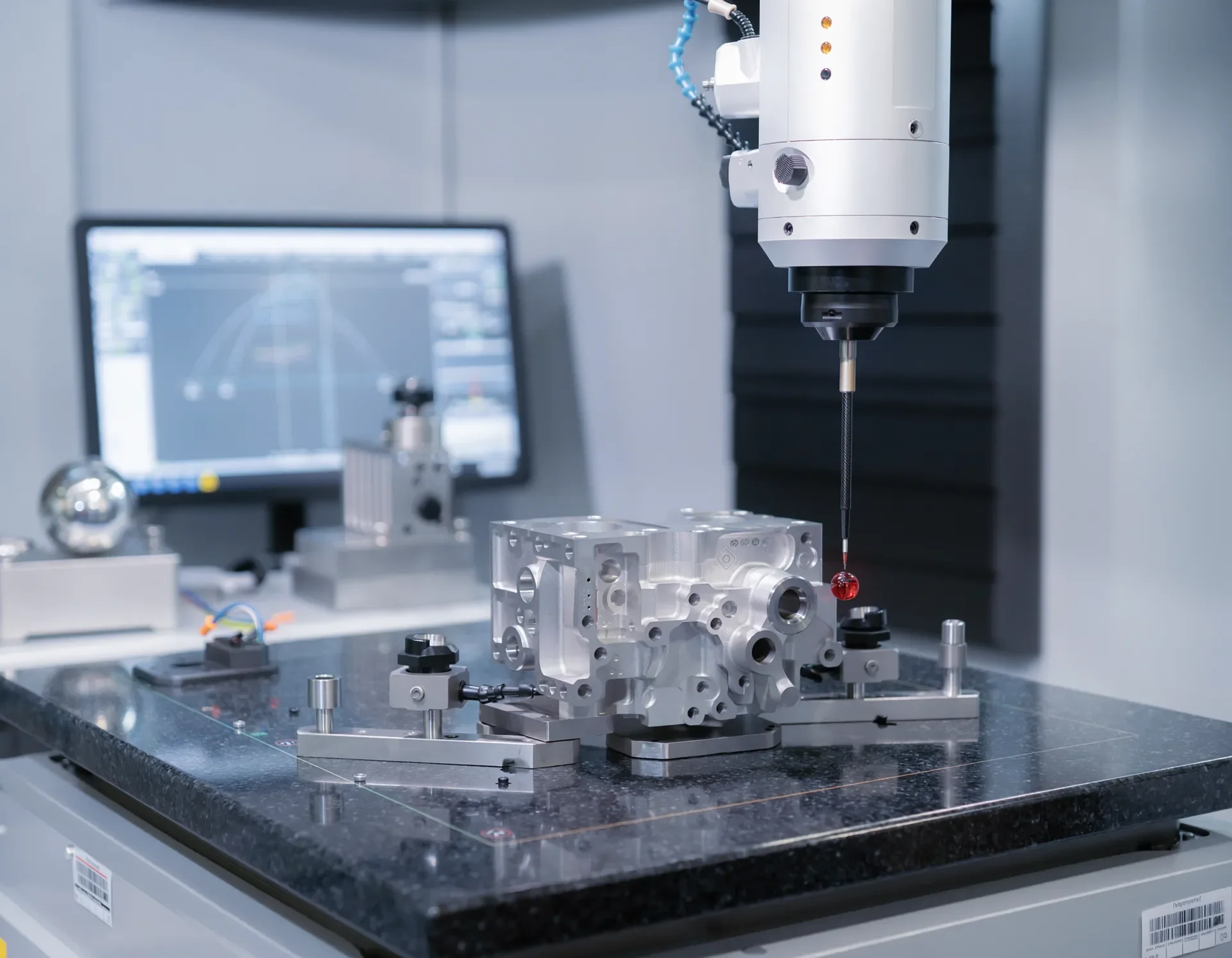
Ever notice how perfect a 3D model looks on your computer screen? In the digital world, everything is exact. But when we move from the screen to the shop floor, things get a bit more "real."
Physical materials like metal react to heat, vibration, and even the pressure of a cutting tool. Because of this, it’s impossible to make a part that is 100% "perfect" every single time.
That is where machining tolerances come in. Think of a tolerance as the "allowable wiggle room" for a part’s dimensions. It’s the secret to making sure your parts actually fit together without costing a fortune.
The Three Ways We Talk About Variation
When you're designing a part, you’ll usually use one of three types of tolerances to tell us how much room we have to work with.
Bilateral tolerances are like a two-way street. We can go a little bit over or a little bit under your target size. If you ask for 50mm $\pm$ 0.1mm, any part between 49.9mm and 50.1mm is a winner.
Unilateral tolerances only let us go in one direction. This is huge when you’re fitting a shaft into a hole—you might allow it to be a tiny bit smaller so it doesn't get stuck, but never larger.
Finally, there are limit tolerances. These just give us a "high" and a "low" number directly on the drawing. If the part stays within that range, it’s good to go.
The Real Cost of Precision
Here is a little secret from the manufacturing side: tighter isn't always better. It’s tempting to put a tiny tolerance on every dimension just to be safe, but that’s the fastest way to blow your budget.
Every time we shrink that tolerance zone, we have to use slower speeds, more expensive tools, and spend more time on inspection.
The goal is to find that "sweet spot." You want the part to be just precise enough to function perfectly, but loose enough to keep your production costs low.
Navigating the Global Rules: ISO vs. GB/T
If you've looked at technical drawings before, you’ve probably seen ISO 2768. This is the international "rulebook" for general tolerances when nothing else is specified.
When you work with a manufacturer in China, you might see a different code: GB/T 1804.
Here’s the good news: they are technically identical. Whether your part is being made in Germany or Shenzhen, the standards for "Medium" or "Fine" accuracy are the same, so you can trust that the quality will be consistent.
Why Material Choice Matters
Not all metals are created equal when it comes to holding a tight line. Some materials are "stable," while others like to warp or spring back when we cut them.
Aluminum 6061-T6 is the industry's favorite for a reason. It is incredibly stable and behaves very predictably under a cutting tool, making it easier (and cheaper) to hit those precise numbers.
If you need even more strength, Aluminum 7075-T6 is a great step up. It holds tolerances beautifully, though the material itself costs a bit more.
Pro-Tips for Your Next Project
Most mechanical parts do perfectly well with a "Medium" (m) tolerance class. It’s the best balance of reliable performance and a friendly price tag.
One of the best things you can do is move beyond just a 3D model. Providing a clear technical drawing is like giving us a map. It shows us exactly which dimensions are critical and which ones have a little more room to breathe.
We’re Here to Help
Getting the tolerances right can feel like a bit of a balancing act, but you don't have to do it alone. We’ve seen thousands of designs, and we love helping engineers find the most efficient way to build their parts.
If you’re working on a new design, feel free to send over your CAD files. We can provide a DFM (Design for Manufacturing) review to help you get the precision you need without the "over-specifying" price tag. Get a free quote now!