
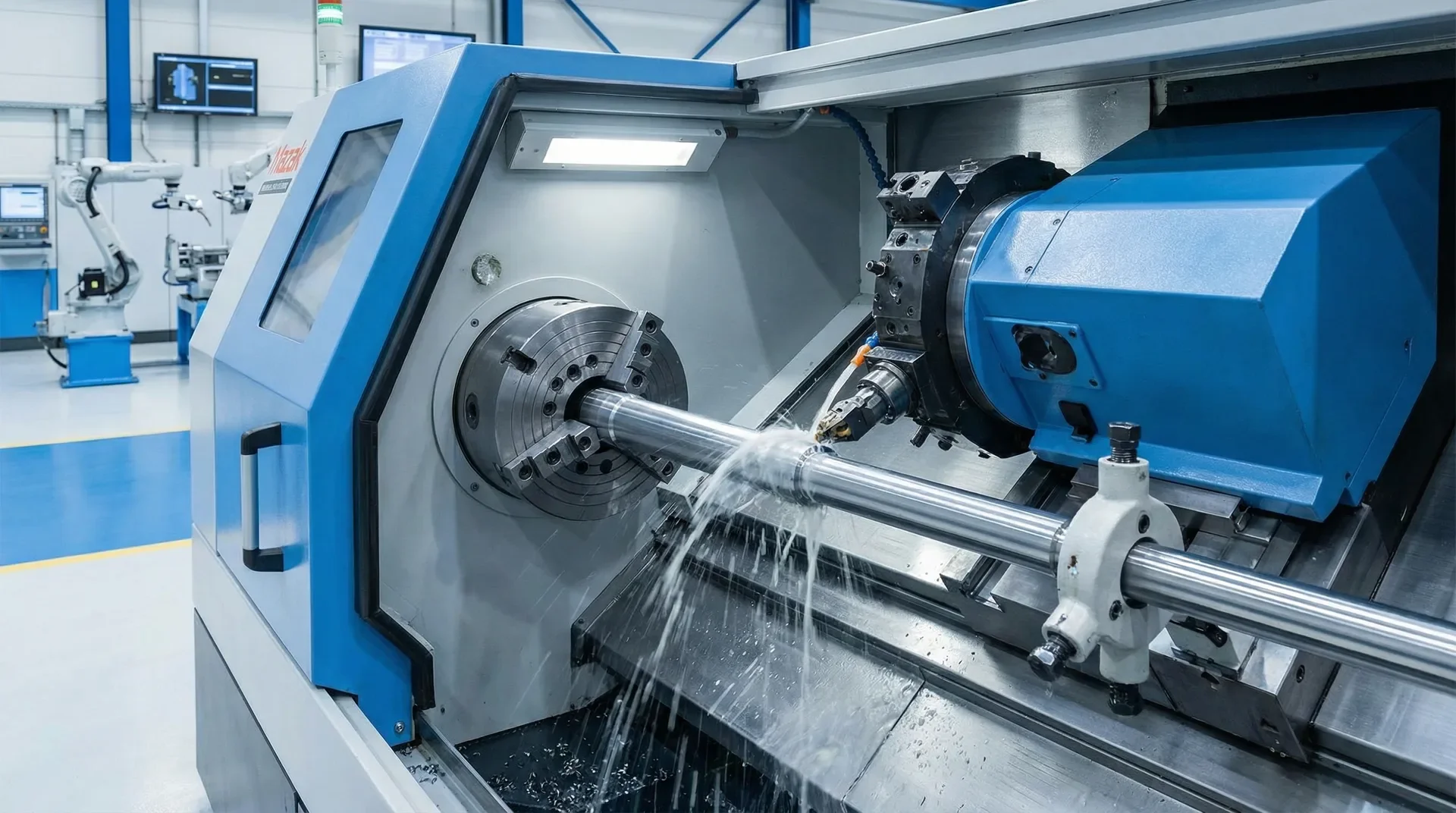
So, you’ve finally perfected your prototype. It looks great, it works perfectly, and now comes the big question: How do we make 100,000 more just like it?
Moving from a few samples to mass production CNC turning can feel a bit like jumping into the deep end. You might worry about parts looking different in the second batch or costs spiraling out of control.
We’ve helped countless engineers make this transition. Think of this as your guide to scaling up without the headaches.
The Secret is Stabilization
When you're making five parts, you can baby each one. But when you’re making a million, you need stabilization.
In high-volume work, we focus on making the process so steady that the 100,000th part is an exact twin of the first one. We measure success in microns—that’s thinner than a human hair—spread across months of production.
The Friendly Math of Scaling Up
The best part about mass production is how the costs drop. You have a one-time fee called NRE (Non-Recurring Engineering), which covers the initial setup and programming.
If your setup costs $500 and you only make 10 parts, that’s $50 per part just for the setup! But if you make 100,000 parts, that setup cost is basically zero per unit.
To keep costs even lower, we use automated bar feeders and robotic arms. This allows for "lights-out" manufacturing, where the machines keep working while the team is home sleeping.
Choosing the Right Machine for the Job
Not all lathes are created equal. Choosing the right one for your specific part can save you a fortune.
- Traditional CNC Lathes: These are the workhorses for larger or shorter parts. They are reliable and great for general cylindrical shapes
- Swiss-Type Lathes: If your part is long and thin, you need a Swiss machine. It uses a guide bushing to support the metal right where it's being cut, so the part doesn't bend or vibrate.
- Multi-Spindle Machining: These are the speed kings. They have several "hands" working on different parts of the piece at the same time. It’s about 4 to 6 times faster than a standard machine.
Picking the Right Metal
In mass production, the "cheapest" material can sometimes be the most expensive if it's hard to cut.
Aluminum 6061 is a crowd favorite because it’s easy on the tools and stays very stable. If you need stainless steel, we often recommend Grade 303 over 304 because it has a little bit of sulfur that acts like a built-in lubricant.
For tough jobs like Titanium Grade 5, we use high-pressure coolant systems to keep things from getting too hot and ruining the precision.
Design Tips to Save You Money
We call it the "Precision Tax." If you ask for a tolerance of ±0.01mm on a surface that doesn't actually touch anything, you’re paying for extra time and tool wear you don't need.
Try to keep your internal radii at least 0.8mm. This lets us use standard, sturdy tools that won't break. Also, try to keep your wall thickness at least 0.8mm so the part doesn't "chatter" or shake while it's being turned.
Keeping the Quality High (No "Quality Fade")
You might have heard of "Quality Fade," where the first batch is great but the third batch starts to slip. We prevent this using SPC (Statistical Process Control).
Instead of just checking parts at the end, we track the machine’s performance in real-time. We look for a Cpk score (a consistency rating) of 1.33 or higher. If the score dips, we fix the machine before a single "bad" part is even made.
The "Pilot Run": Your Safety Net
Before we go full-speed, we always recommend a Pilot Run. We’ll run a few hundred units to see if there are any hidden bottlenecks.
It’s like a dress rehearsal for your part. It ensures that when we hit the "start" button for the big order, everything runs like clockwork.
We believe in radical transparency. You should always get the full data—CMM reports and material certifications—so you can sleep soundly knowing your production is in good hands.